


LIFTR.
LIFTR Liquid Chalk | High Grip Non-Mess Chalk for Weightlifting, Calisthenics & Climbing | 50ml & 250ml
LIFTR Liquid Chalk | High Grip Non-Mess Chalk for Weightlifting, Calisthenics & Climbing | 50ml & 250ml
Couldn't load pickup availability
Free UK Shipping
On orders over £50
30-Day Guarantee
Not happy? We'll sort it.
Easy Returns
Unused items within 30 days
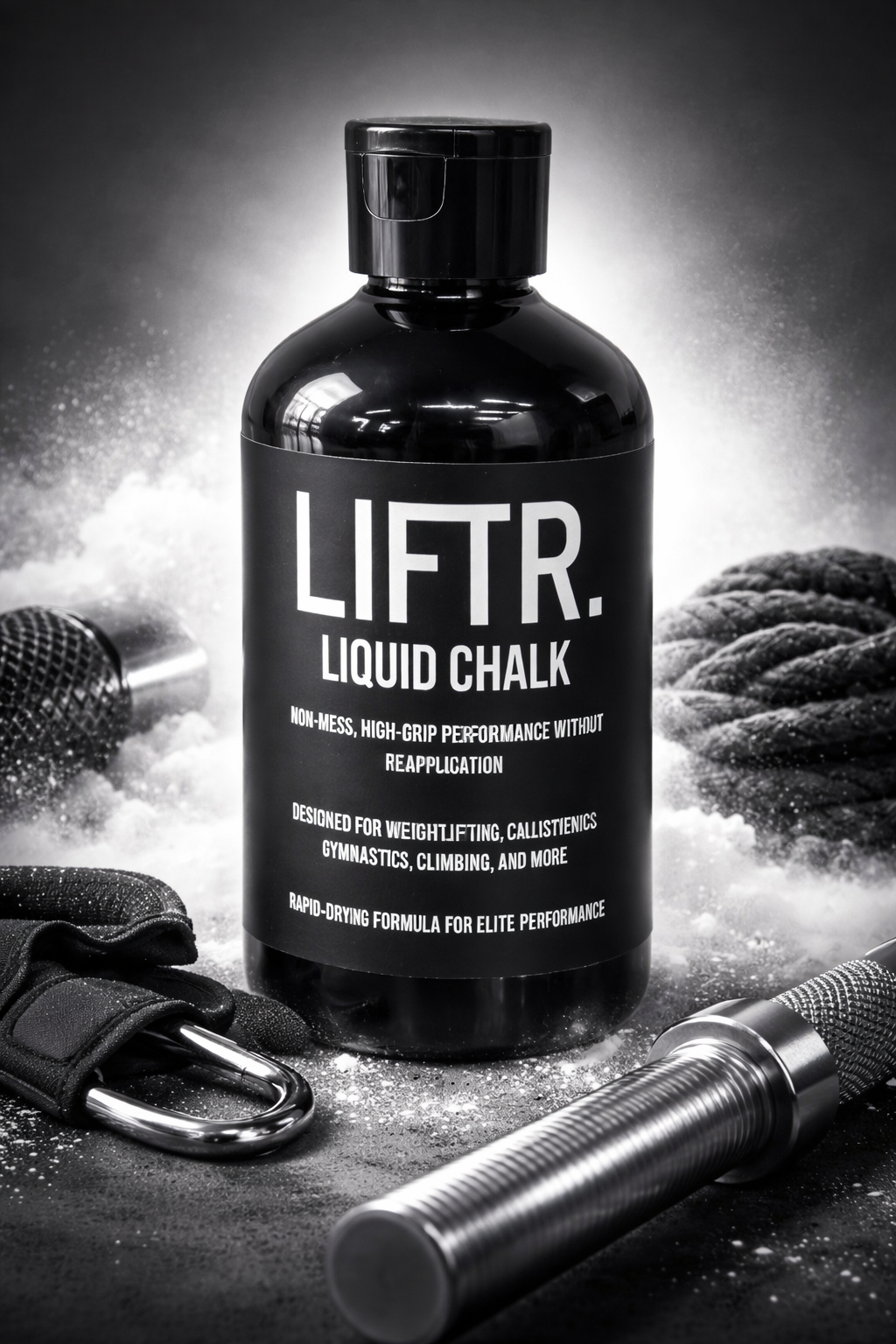
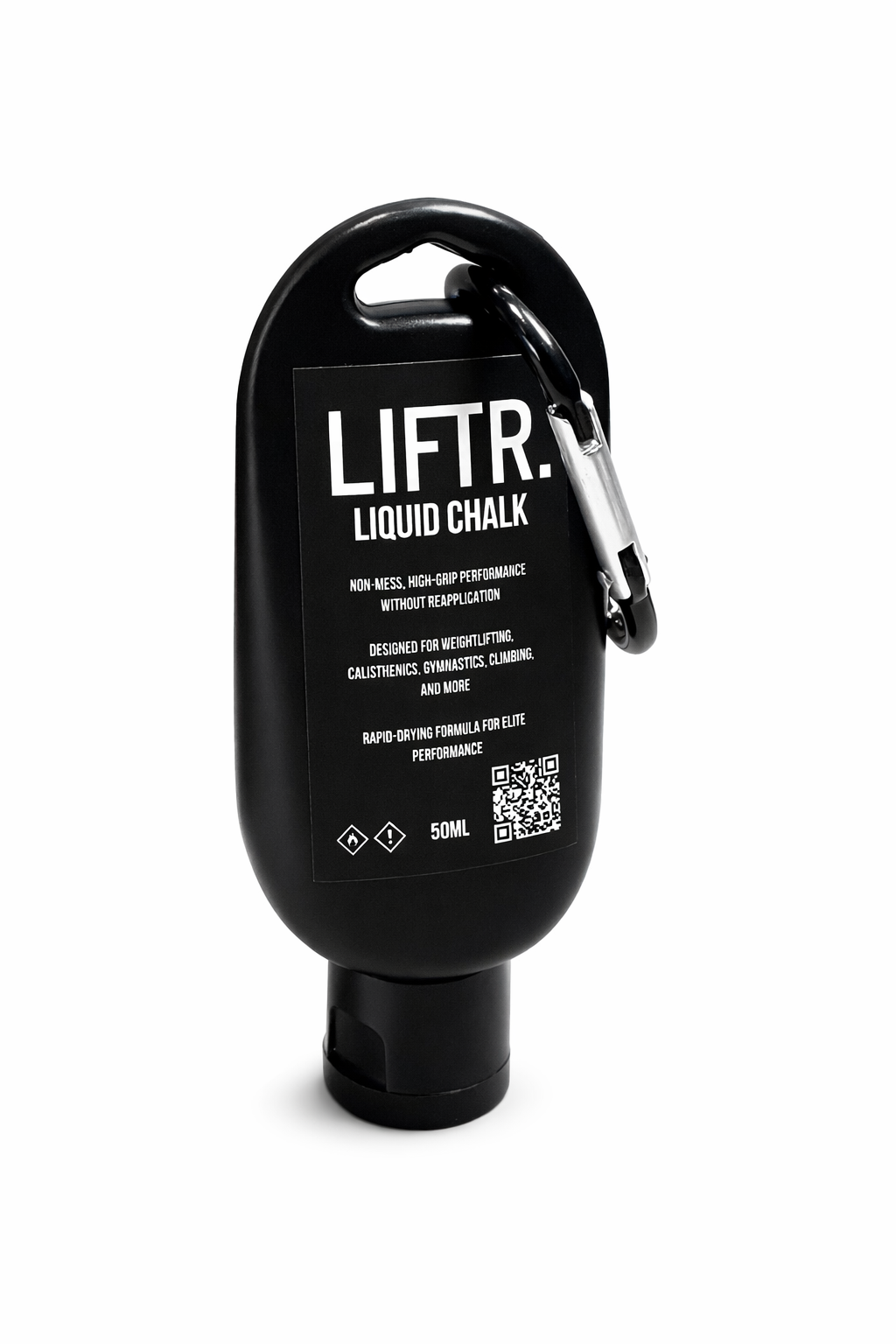
LIFTR Liquid Chalk is a rapid-drying grip chalk designed for weightlifting, powerlifting, calisthenics, gymnastics, and climbing. It applies as a liquid, dries within seconds, and leaves a clean chalk layer on the hands without powder clouds, spills, or residue — making it suitable for gyms where loose chalk is restricted or banned. Available in 50ml and 250ml.
50ml — compact and portable, fits any gym bag or chalk bag for training on the go
250ml — full-size bottle for home gym, regular gym training, and high-frequency use
Key Features
Key Features
High grip performance for lifting, calisthenics and climbing
LIFTR Liquid Chalk enhances friction between hands and equipment — bars, rings, pull-up handles, barbells, dumbbells, and climbing holds — reducing the risk of grip failure during heavy or high-repetition sets. Suitable for deadlifts, pull-ups, ring work, muscle-ups, rows, and climbing movements where secure hand contact is critical to performance and safety.
Rapid-drying formula — ready in seconds
Applies as a liquid and dries within seconds of application, leaving a clean, even chalk layer across the palm and fingers. No waiting, no shaking out excess powder, no reapplication mid-set. Apply before your set, dry, and train.
Non-mess — no clouds, no residue, no cleanup
Unlike loose block chalk or powder chalk, liquid chalk produces no airborne dust on application and leaves no chalk cloud on contact with equipment. Suitable for use in commercial gyms, CrossFit boxes, and climbing walls where loose chalk is restricted or not permitted. No chalk residue left on floors, benches, or equipment after use.
Long-lasting hold — fewer reapplications per session
The chalk layer bonds to the skin on application and holds through multiple sets without significant degradation. Reduces the frequency of reapplication compared to loose chalk during high-volume training sessions, keeping you focused on training rather than grip maintenance.
Available in 50ml and 250ml
The 50ml bottle is compact enough to fit in any gym bag, chalk bag, or trouser pocket — ideal for travelling athletes, outdoor climbing, and park calisthenics sessions. The 250ml bottle is suited to home gym use, regular gym training, and anyone going through chalk at high volume. Both sizes use the same formula.
Compact and portable — train anywhere
Liquid chalk eliminates the mess and bulk of carrying loose chalk blocks or a chalk bag. The sealed bottle travels cleanly without risk of spilling or contaminating other kit. Use at the gym, at the climbing wall, at the park, or at home — the same bottle covers every training environment.
Specifications
Specifications
- Available sizes: 50ml · 250ml
- Type: Liquid chalk
- Finish: Rapid-drying — dries within seconds of application
- Suitable for: Indoor and outdoor use
Best suited to: Weightlifting and powerlifting · Deadlifts and barbell work · Pull-ups and chin-ups · Calisthenics and gymnastics · Ring training · Climbing and bouldering · CrossFit · Kettlebell training
Suitable for: Commercial gyms where loose chalk is restricted · CrossFit boxes · Climbing walls · Home gym training · Outdoor calisthenics and park training
How to Use
How to Use
Application
Shake the bottle gently before use. Squeeze a small amount — approximately a 10p coin size — onto one palm. Rub both hands together, working the liquid chalk across the full palm, fingers, and thumb base. Allow to dry for a few seconds until the liquid has evaporated and a dry chalk layer remains. Apply before your set — do not apply mid-rep.
How much to use
Start with a small amount — liquid chalk is more concentrated than it appears. A 10p coin-sized application covers both hands fully for most training movements. Over-application does not improve grip and extends drying time. Less is more — build up to the right amount for your hand size and training over the first few uses.
For weightlifting and barbell training
Apply before deadlifts, rows, pull-ups, and any pulling movement where grip is a limiting factor. Reapply between working sets if the chalk layer has worn down significantly — typically every 2–3 sets for high-rep pulling work. For lower-rep strength sets, a single application often covers a full working block.
For calisthenics and ring training
Apply before ring work, pull-up bar training, muscle-up practice, and bar calisthenics. The non-mess formula is particularly well-suited to ring training where chalk residue on the rings themselves can build up over time — liquid chalk leaves significantly less residue on equipment than loose chalk.
For climbing and bouldering
Apply before climbing sessions and reapply between routes or problems as needed. The 50ml bottle fits most chalk bag pockets and can be carried on the wall without taking up significant space or weight.
Storage
Store with the lid sealed between uses. Keep away from direct heat sources. The sealed bottle is spill-proof for transport in a gym bag or backpack.
FAQs
FAQs
What is liquid chalk and how does it work?
Liquid chalk is a suspension of magnesium carbonate — the same compound used in standard gym chalk and climbing chalk — in a liquid carrier that typically includes alcohol. When applied to the hands, the carrier evaporates within seconds, leaving a dry magnesium carbonate layer that increases friction between the hands and the equipment being gripped. It provides the same grip enhancement as loose chalk with significantly less mess and no airborne dust.
Is liquid chalk as effective as loose chalk for weightlifting?
Yes — liquid chalk and loose chalk use the same active compound (magnesium carbonate) and provide comparable grip enhancement for weightlifting, powerlifting, and calisthenics. The practical advantage of liquid chalk is that it produces no powder cloud on application, leaves less residue on equipment, and is permitted in most commercial gyms where loose chalk is banned or restricted.
Can I use liquid chalk in a gym that bans loose chalk?
Yes. Most commercial gyms that prohibit loose block chalk or powder chalk permit liquid chalk, as it produces no airborne dust and leaves significantly less residue on bars and equipment. If you are unsure, check with your gym directly — but liquid chalk is the standard alternative to loose chalk in gym environments where powder chalk is not permitted.
Which size should I buy — 50ml or 250ml?
The 50ml bottle is the better choice for travelling athletes, climbers carrying chalk on the wall, outdoor calisthenics training, and anyone who wants a compact bottle for their gym bag. The 250ml bottle is more cost-effective for regular training and better suited to home gym use or high-frequency training sessions. Both sizes contain the same formula.
How long does a bottle of liquid chalk last?
Usage varies depending on hand size, application amount, and training frequency. As a guide, a small application per session means the 250ml bottle covers significantly more sessions than the 50ml. Start with a conservative amount per application — a common mistake with liquid chalk is applying too much, which wastes product and extends drying time without improving grip.
Is liquid chalk suitable for climbing?
Yes. Liquid chalk is widely used by climbers and boulderers as an alternative or complement to loose chalk. It is particularly practical for climbing walls and gyms where chalk bag dust is restricted, and the compact bottle size means it can be carried on the wall without the bulk of a full chalk bag. Apply before routes and reapply between problems as needed.
Does liquid chalk damage barbells or gym equipment?
Liquid chalk leaves significantly less residue on barbells, pull-up bars, and rings than loose chalk and is easier to wipe clean from equipment after use. It does not damage knurling, bar coatings, or ring surfaces under normal training use. Regular cleaning of bars and equipment is good practice regardless of chalk type.
Delivery & Returns
Delivery & Returns
Delivery
- Free UK delivery on orders over £50
- Next day delivery on orders placed before 2pm (Mon–Fri)
- International delivery calculated at checkout (varies by location and order size)
- All orders tracked — tracking info provided once dispatched
Returns
- 30-day returns on unused items
- Wrong or faulty item? We'll cover the return postage
- All other returns are at the customer's cost
- To start a return, email sales@lift-r.co.uk with your order number
Share



LIFTR Liquid Chalk | High Grip Non-Mess Chalk for Weightlifting, Calisthenics & Climbing | 50ml & 250ml
£8.99£4.99