LIFTR.
LIFTR® Weighted Dip Belt – Heavy Duty Chain Belt for Dips, Pull-Ups & Calisthenics
LIFTR® Weighted Dip Belt – Heavy Duty Chain Belt for Dips, Pull-Ups & Calisthenics
Couldn't load pickup availability
The LIFTR Weighted Dip Belt is a heavy-duty nylon and steel chain loading belt designed for weighted dips, pull-ups, chin-ups, and calisthenics training. Rated to 250kg, built with a wide back support panel, and finished in matte black — engineered for athletes who train with progressive overload at the centre of their programme.
Heavy-duty steel chain — smooth, secure weight loading with no weak points
Wide back support — distributes load evenly across the hips for comfort during heavy sets
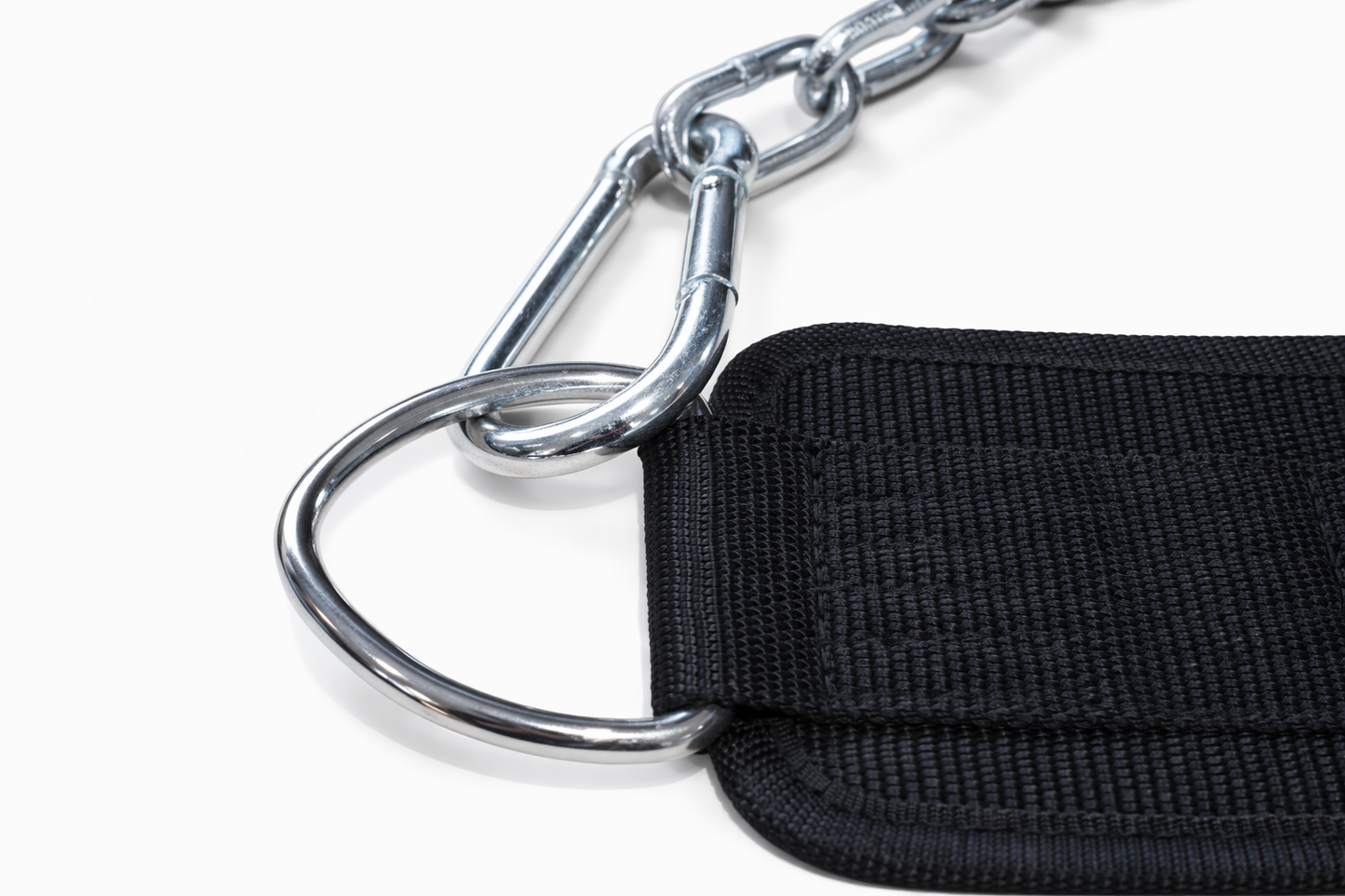
Secure D-ring attachment — keeps weight plates centred and stable throughout the movement
One size fits all — adjustable fit for calisthenics athletes, gym lifters, and strength trainees at every level
Key Features
Key Features
- Rated to 250kg — built for serious progressive overload
The LIFTR Dip Belt is rated to 250kg, making it one of the highest-capacity dip belts available for home gym and commercial gym use. Whether you're loading a single plate for your first weighted dip or stacking significant weight for advanced calisthenics training, this belt is built to handle it without compromise. - Heavy-duty steel chain for secure, stable weight loading
The steel loading chain threads through weight plates and connects to the D-ring on both sides of the belt, keeping the load centred and stable throughout the movement. No swinging, no shifting, no distraction — just smooth, controlled resistance on every rep. - Wide back support panel for even load distribution
The wide nylon back panel distributes the weight of loaded plates evenly across the hips rather than concentrating pressure on a single point. Designed for comfort during heavy weighted dips, pull-ups, and chin-ups so load — not discomfort — is the limiting factor in your training. - Reinforced construction — heavy-duty nylon throughout
Made from heavy-duty nylon with reinforced stitching at all load-bearing points. Built for long-term, high-frequency training use — not a single season of gym sessions. The construction is designed to handle repeated loading at significant weight without degradation at seams or attachment points. - Secure D-ring system — balanced attachment on both sides
Dual D-rings on each side of the belt provide a balanced, symmetrical attachment point for the chain. Weight sits centred below the hips throughout the movement, maintaining stability during weighted dips, pull-ups, and muscle-ups without lateral drift or imbalance. - One size fits all — suitable for all athletes
Adjustable fit designed to work across a wide range of body types and sizes. Suitable for calisthenics athletes, powerlifters, gym lifters, and strength trainees from beginner to advanced level. - Matte black finish with LIFTR branding
Finished in ultra-matte black with subtle LIFTR branding. Clean, minimal aesthetic designed to match any gym setup without the bulk or visual noise of over-branded training accessories.
Specifications
Specifications
- Material: Heavy-duty nylon
- Chain: Steel loading chain
- Colour: Matte Black
- Fit: One size fits all
- Load Rating: Up to 250kg
- Attachment: Dual D-ring system
- Finish: Ultra-matte black with LIFTR branding
Best suited to: Weighted dips · Weighted pull-ups and chin-ups · Calisthenics training · Muscle-ups · Progressive overload training · Home gym and commercial gym use
Suitable for: Calisthenics athletes · Gym lifters · Strength trainees · Beginners through to advanced level
How to Use
How to Use
Setting up the belt
Feed the steel chain through the centre hole of your weight plate or plates. Wrap the belt around your waist so the wide back panel sits across your lower back and hips. Connect both ends of the chain to the D-rings on each side of the belt, adjusting the chain length so the plates hang centred below your hips with minimal slack. The weight should feel balanced and secure before you begin your set.
Weighted dips
Mount the dip bars with the weight hanging freely below your hips. Lower yourself under control until your upper arms are parallel to the floor, then press back up to full extension. The D-ring attachment keeps the weight centred and stable throughout the movement. Start conservatively with added load — even small amounts of additional weight create significant demand on the chest, triceps, and shoulders when added to bodyweight dips.
Weighted pull-ups and chin-ups
Set up the belt and hang from your pull-up bar in a dead hang. Pull up until your chin clears the bar, then lower under control back to full extension. Weighted pull-ups are one of the most effective upper back and bicep strength movements available — using a dip belt allows you to add load progressively in small increments over time.
Muscle-ups and advanced calisthenics
For muscle-ups and other advanced calisthenics movements, ensure the chain length is adjusted so the weight plate sits as close to the hips as possible without restricting movement. A shorter chain reduces swinging and keeps the load stable through the transition phase of the muscle-up.
Progressive overload guidance
Add weight in small increments — 2.5kg to 5kg at a time is the standard approach for weighted calisthenics. Maintain consistent form and full range of motion at every weight increase before progressing further. The goal of the dip belt is to extend your progressive overload beyond bodyweight — not to sacrifice movement quality for added load.
FAQs
FAQs
What is a weighted dip belt used for?
A weighted dip belt is used to add external load to bodyweight exercises such as dips, pull-ups, chin-ups, and muscle-ups. It allows athletes to apply progressive overload to calisthenics movements in the same way a barbell lifter adds weight to a bar — by incrementally increasing the load over time to continue building strength. A dip belt is the standard tool for weighted calisthenics training at all levels.
How much weight can the LIFTR Dip Belt hold?
The LIFTR Weighted Dip Belt is rated to 250kg. This makes it suitable for athletes at every level — from those adding their first plate for weighted dips through to advanced lifters training with significant additional load on pull-ups and calisthenics movements.
Is a dip belt suitable for beginners?
Yes. A dip belt is suitable for anyone who can perform bodyweight dips or pull-ups with consistent form and is looking to progress further. There is no minimum strength requirement — even adding a small amount of weight to bodyweight dips or pull-ups is a valid and effective progression method for beginners building upper body strength.
What exercises can I do with a weighted dip belt?
The primary exercises for a weighted dip belt are dips, pull-ups, chin-ups, and muscle-ups. It can also be used for hanging leg raises with added resistance, and for any other hanging or pressing movement where adding load below the hips is practical. The LIFTR belt is designed specifically for calisthenics athletes and gym lifters using progressive overload as the foundation of their training.
How do I load a dip belt with weight plates?
Thread the steel chain through the centre hole of your chosen weight plate or plates before putting the belt on. Wrap the belt around your waist, connect both ends of the chain to the D-rings on each side, and adjust the chain length so the plates hang centred below your hips. Standard Olympic and standard weight plates both fit the chain.
Is one size fits all reliable for a dip belt?
Yes — the LIFTR Dip Belt is designed with an adjustable fit that accommodates a wide range of waist sizes and body types. The wide back panel and adjustable chain length mean the belt can be configured to sit correctly across the hips for athletes of different sizes without compromising load distribution or stability.
What is the difference between a dip belt and a lifting belt?
A dip belt is worn around the waist to suspend weight plates below the hips during hanging and pressing exercises — its purpose is to add external load to bodyweight movements. A lifting belt is worn around the lower back and abdomen to support spinal stability during heavy barbell lifts such as deadlifts and squats. They serve entirely different functions and are not interchangeable.
Why use a dip belt instead of a weighted vest?
A dip belt allows you to add and remove load in precise increments using standard weight plates, making it more practical for progressive overload training than a weighted vest. Vests typically come in fixed weight increments and cannot be adjusted mid-session. A dip belt also handles significantly higher loads than most weighted vests — making it the preferred choice for intermediate and advanced calisthenics athletes and gym lifters.
Delivery & Returns
Delivery & Returns
Delivery
- Free UK delivery on orders over £50
- Next day delivery on orders placed before 2pm (Mon–Fri)
- International delivery calculated at checkout (varies by location and order size)
- All orders tracked — tracking info provided once dispatched
Returns
- 30-day returns on unused items
- Wrong or faulty item? We'll cover the return postage
- All other returns are at the customer's cost
- To start a return, email sales@lift-r.co.uk with your order number
Share