My Store
LIFTR Resistance Bands | Pull-Up Assist & Strength Training | 208cm
LIFTR Resistance Bands | Pull-Up Assist & Strength Training | 208cm
Couldn't load pickup availability
LIFTR Resistance Bands are professional-grade 208cm closed-loop pull-up assist bands made from 100% natural latex. Designed for pull-up training, calisthenics, home gym strength work, and banded barbell movements — these are the resistance bands built to take you from your first assisted pull-up to your first unassisted rep, and beyond.
Light Band (Red) — pull-up assist for lighter users, mobility, stretching, and warm-up activation
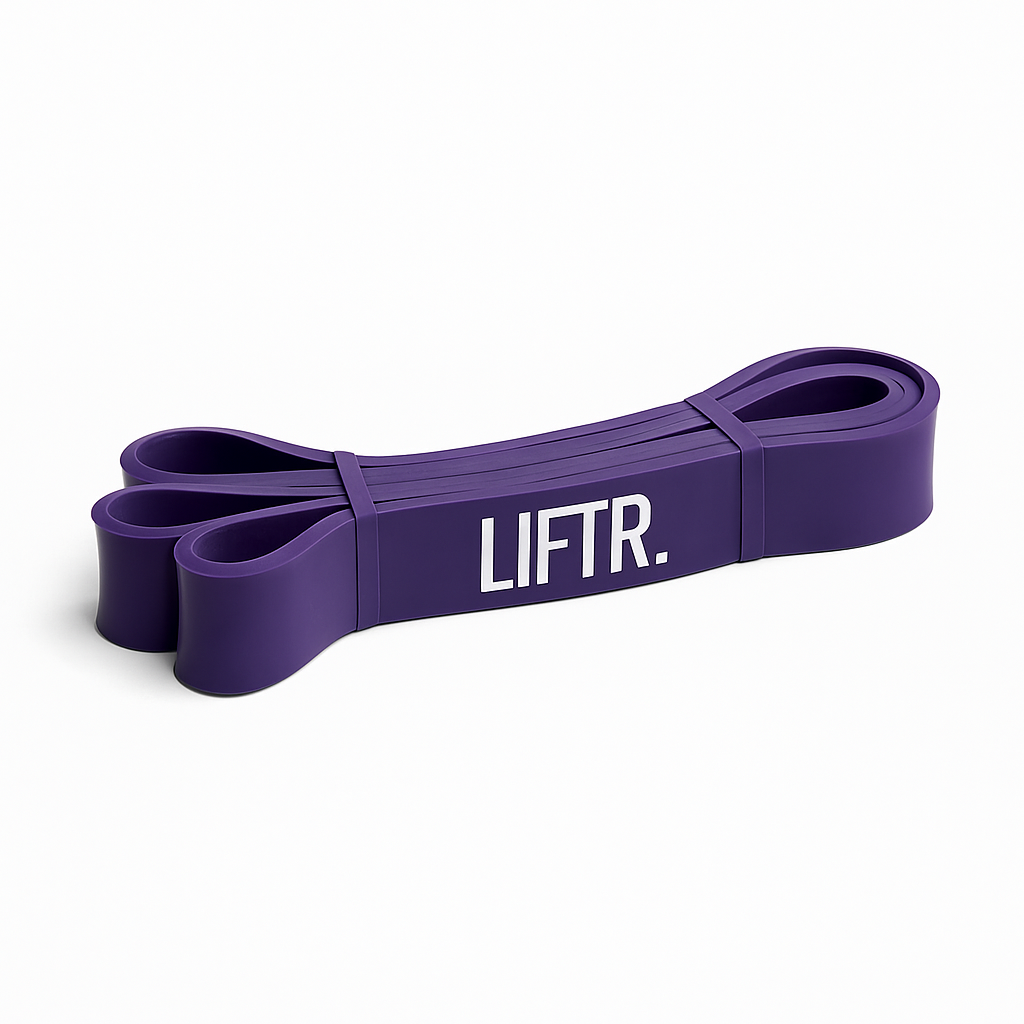
Medium Band (Purple) — intermediate pull-up assist, banded upper body exercises, and calisthenics training
Heavy Band (Black) — maximum pull-up assistance, banded deadlifts, squats, and powerlifting accessory work
Set of 3 — the complete progressive pull-up training system covering every level in one purchase
Key Features
Key Features
- 100% natural latex construction
Made from high-grade natural latex — the industry standard material for closed-loop resistance bands. Delivers smooth, consistent resistance throughout the full range of motion with no rolling, bunching, or uneven tension. Built to withstand high-frequency training across pull-up work, barbell movements, and mobility sessions.
- Three resistance levels for full progressive training
Light (Red), Medium (Purple), and Heavy (Black) bands cover the complete spectrum of resistance band training. Start with maximum assistance on the Heavy Band, reduce assistance as pulling strength develops, and progress towards unassisted pull-ups — the right band for every stage of your calisthenics or home gym programme.
- 208cm closed loop — fits any pull-up bar or power rack
The standard 208cm length fits wall-mounted pull-up bars, door-frame pull-up bars, power rack uprights, squat rack pegs, and barbell sleeves. No adapters, extensions, or accessories required. Works straight out of the bag with any standard home gym or commercial gym setup.
- Dual-purpose — pull-up assist and barbell resistance training
The only resistance band set you need for both calisthenics and powerlifting accessory work. Use for assisted pull-ups and chin-ups at every level, and use the Heavy Band for banded deadlifts, banded squats, hip thrusts, and accommodating resistance training. Two training tools in one compact band.
- Compact, portable, and home gym ready
All three bands pack down small enough for a gym bag, a drawer, or a wall hook. No footprint, no assembly, no maintenance. The most space-efficient addition to any home gym setup — and one of the most versatile pieces of equipment you can own for under £50.
- Buy the Set of 3 — no repeat purchases as you progress
Progressive pull-up training requires progressively less assistance. Buying the Set of 3 at the outset means you have the right band at every stage of your programme — from first assisted rep to full unassisted sets — without reordering as your strength develops.
- Buy the Set of 3 — no repeat purchases as you progress
Progressive pull-up training requires progressively less assistance. Buying the Set of 3 at the outset means you have the right band at every stage of your programme — from first assisted rep to full unassisted sets — without reordering as your strength develops.
Specifications
Specifications
- Band Length: 208cm
- Material: 100% Natural Latex
- Design: Continuous closed loop — no joins or seams
- Resistance Range: 2–57kg across the range (varies per band)
- Colours: Red (Light) · Purple (Medium) · Black (Heavy)
- Available as: Individual bands or Set of 3
Compatibility: Wall-mounted pull-up bars · Door-frame pull-up bars · Power rack uprights · Squat rack pegs · Barbell sleeves
Best suited to: Pull-up and chin-up training · Calisthenics · Home gym strength training · Powerlifting accessory work · Banded barbell movements · Stretching and mobility · Warm-up and activation
How to Use
How to Use
Pull-up and chin-up assistance
Loop the resistance band over your pull-up bar so both ends hang down and form a closed loop below the bar. Step or kneel into the bottom of the loop. As you perform the pull-up or chin-up, the band stretches and generates upward force, reducing the effective bodyweight load your back and biceps need to lift. The heavier the band, the more assistance it provides.
Start with the Heavy Band if you are new to pull-up training or returning after time away. Progress to the Medium Band once you can complete 3 sets of 8–10 reps comfortably, then move to the Light Band as you approach unassisted pull-up capability. Remove the band entirely once full unassisted reps are achievable — keep the Light Band for warm-up activation sets before your main pull-up training.
Banded barbell deadlifts (Heavy Band)
Stand inside the band with both feet positioned on the centre of the loop, hip-width apart. Hook each end of the band over the barbell sleeve before you lift. The band should be taut at the bottom position. As the bar rises, the band stretches and adds increasing resistance, loading the lockout position more heavily than a conventional deadlift. Widely used in powerlifting programmes to address lockout sticking points and develop explosive pulling strength.
Banded barbell squats (Heavy Band)
Secure each end of the band to the lowest available peg on your squat rack or power rack uprights. Drape the band over the centre of the barbell before unracking. Perform squats as normal — the band creates accommodating resistance that increases as you drive up through the rep, developing strength through the top portion of the movement.
Banded hip thrusts and posterior chain work (Heavy Band)
Loop the band across your hips and anchor each end under your feet or to a fixed low point. Perform hip thrusts or glute bridges as normal. The band adds horizontal resistance at the top of the movement, increasing glute activation without needing to increase barbell load.
Stretching and mobility (Light Band)
Loop the band around your foot, ankle, or wrist to apply controlled tension during static and dynamic stretches. Use for assisted hamstring stretches, hip flexor openers, shoulder mobility drills, and thoracic rotations. The Light Band provides enough tension to deepen stretches without overstressing joints — ideal as part of a warm-up or cool-down routine.
Upper body activation and warm-up drills (Light or Medium Band)
Anchor the band to a fixed bar or rack upright and perform banded pull-aparts, face pulls, lat activations, and shoulder rotations before your main training session. Activating the posterior shoulder and lat muscles with band work before heavy pulling or pressing movements is a widely used injury prevention and performance technique.
FAQs
FAQs
What resistance bands are best for pull-up training?
Closed-loop natural latex resistance bands in the 208cm length are the standard for pull-up training. The key is having the right resistance level for your current strength — too much assistance and you won't develop pulling strength, too little and you won't be able to complete quality reps. The LIFTR Set of 3 covers Light, Medium, and Heavy resistance so you have the right band at every stage of your pull-up programme.
Which resistance band should I start with for pull-ups?
If you are new to pull-ups or cannot yet complete a full unassisted rep, start with the Heavy Band. It provides the most upward assistance and allows you to train the complete pull-up movement — full hang to chin over the bar — from your very first session. Progress to the Medium Band once 3 sets of 8–10 assisted reps feel manageable, then move to the Light Band as you close in on unassisted capability.
What is the difference between light, medium, and heavy
resistance bands?
The three bands differ in thickness and the amount of resistance they generate when stretched. The Light (Red) Band provides the least resistance and is best for beginners, lighter users, and flexibility training. The Medium (Purple) Band suits intermediate pull-up training and general upper body resistance work. The Heavy (Black) Band provides the most assistance and is best for heavier users, beginners requiring maximum pull-up support, and powerlifters using bands with barbell movements. All three bands are 208cm in length and made from 100% natural latex.
Should I buy a resistance band set or individual bands?
A resistance band set is the better option for most people. Pull-up
training is inherently progressive — as your pulling strength improves, you will need progressively less assistance. A set of three bands covers every stage of that progression in a single purchase, without needing to reorder as you get stronger. Individual bands make more sense if you already own certain resistance levels and only need to fill a specific gap.
Can resistance bands be used for powerlifting and barbell
training?
Yes — the Heavy Band in the LIFTR range is well-suited to accommodating resistance in barbell movements. For banded deadlifts, stand inside the band and hook each end over the barbell sleeve. For banded squats, anchor the band to the rack upright and drape it over the bar. Accommodating resistance increases load through the top portion of the lift and is used
in powerlifting programmes to develop strength through sticking points and build explosive force.
Do LIFTR resistance bands fit a standard pull-up bar?
Yes. The 208cm closed loop fits wall-mounted pull-up bars, door-frame pull-up bars, power rack uprights, and most commercial gym pull-up stations without any adapters or accessories. The same band fits barbell sleeves and rack uprights for strength training use.
Are resistance bands good for home gym training?
Resistance bands are one of the most versatile and space-efficient tools for home gym training. A set of three bands covers pull-up assistance, upper body resistance exercises, banded barbell movements, stretching, mobility work, and warm-up drills — without requiring a cable machine, additional weights, or significant storage space. For home gym owners looking to maximise training variety per pound spent and per square foot
used, a resistance band set is one of the highest-value purchases
available.
How do I progress from assisted to unassisted pull-ups using
resistance bands?
Begin with the Heavy Band and focus on completing full-range reps — dead hang at the bottom, chin clearing the bar at the top. Once you can consistently hit 3 sets of 8–10 reps, switch to the Medium Band. When the Medium Band feels manageable at the same volume, move to the Light Band. From there, attempt unassisted pull-ups — most people find the transition from Light Band to unassisted is a small step once they have built consistent volume at each previous stage.
Delivery & Returns
Delivery & Returns
Delivery
- Free UK delivery on orders over £50
- Next day delivery on orders placed before 2pm (Mon–Fri)
- International delivery calculated at checkout (varies by location and order size)
- All orders tracked — tracking info provided once dispatched
Returns
- 30-day returns on unused items
- Wrong or faulty item? We'll cover the return postage
- All other returns are at the customer's cost
- To start a return, email sales@lift-r.co.uk with your order number
Share